
Science / 10-question mixed rounds
Solar system trivia
Planets, rings, and a few cosmic surprises.
Mixed rounds: about 3–5 minutes · No timer
Want to learn first?Study with flashcards
10 random questions per mixed round · 50 questions in the full bank below
Published by Quizpen · Explanations include linked supporting reading. See our source-checking process and review limits.
PRACTICE BY SKILL
Choose a focused round
Practice one part of this topic with every question in that skill. Focused practice is separate from ten-question mixed rounds.
Getting your round ready…
BEHIND THE ROUND
A little more about this quiz
Can you tell the hottest planet from the closest one, or a meteor from a meteorite? This fifty-question bank covers planets, moons, the Sun, eclipses, seasons, small bodies, and missions such as Apollo 11 and Cassini. Mixed rounds draw ten questions; focused practice lets you choose a subject. No telescope or advanced calculations are needed.
Take a first pass from memory, then use the explanations to revisit anything you missed. A new mixed round draws ten questions from a bank of fifty; your ordinary round is saved on this browser so you can return to it. The full printable bank and separate answer key let you choose your own questions for quiz night.
LEARN THE PATTERN
Study planets, moons, the Sun, and missions as separate skills
The fifty-question bank mixes basic planet recognition with moons, orbital ideas, small bodies, and dated space missions. Choose a focused group before returning to a mixed round.
Eight planets, four study groups, and common mix-ups
Follow Mercury, Venus, Earth, Mars, Jupiter, Saturn, Uranus, and Neptune outward from the Sun. Then choose a focused round for planets, moons, the Sun and orbits, or small bodies and missions.
| Order from Sun | Planet | Type | Recall clue |
|---|---|---|---|
| 1 | Mercury | Terrestrial | Closest to the Sun; smallest planet |
| 2 | Venus | Terrestrial | Hottest planetary surface |
| 3 | Earth | Terrestrial | Only planet with confirmed life |
| 4 | Mars | Terrestrial | The Red Planet |
| 5 | Jupiter | Gas giant | Largest planet |
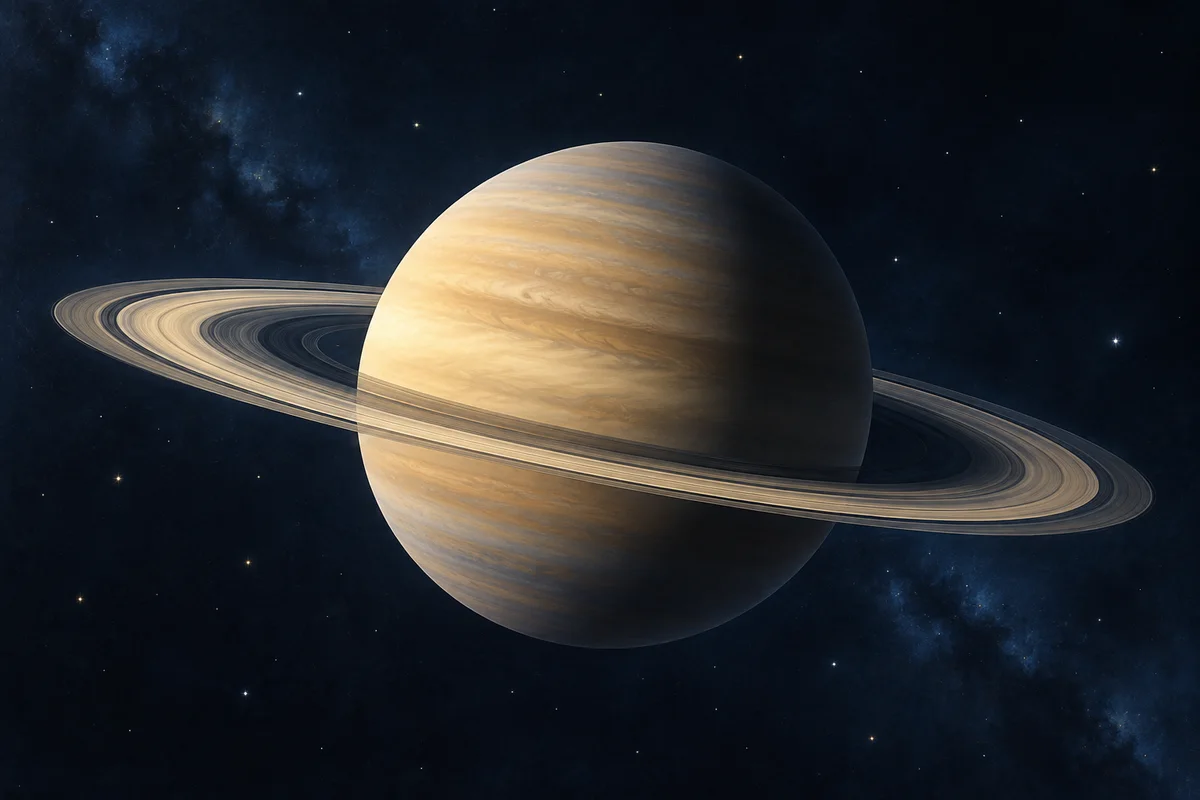
| 6 | Saturn | Gas giant | Prominent ring system |
| 7 | Uranus | Ice giant | Rotates nearly on its side |
| 8 | Neptune | Ice giant | Farthest of the eight planets |
The four terrestrial planets have solid surfaces. Jupiter and Saturn are gas giants; Uranus and Neptune are ice giants. Pluto is classified as a dwarf planet.
Reference sources: NASA: planet order, types, and fact pages · NASA: why Venus is hottest · NASA: Uranus’s tilted rotation · NASA: Ganymede · NASA: meteors and meteorites
Check what you remember
Look away from the table. Try each question, then open it to check your answer.
Which planets come immediately before and after Earth in order from the Sun?Show answer
Venus comes before Earth, and Mars comes after it. Earth is the third planet from the Sun.
Which planet is closest to the Sun, and which has the hottest surface?Show answer
Mercury is closest. Venus has the hottest surface because its thick atmosphere traps heat.
Name the two gas giants, then the two ice giants.Show answer
Jupiter and Saturn are gas giants. Uranus and Neptune are ice giants.
Is the largest planet also the home of the largest moon?Show answer
Yes. Jupiter is the largest planet, and its moon Ganymede is the largest moon in the solar system.
When is space-rock material called a meteorite?Show answer
When it survives passage through the atmosphere and reaches the ground. A meteor is the bright atmospheric streak, not the material itself.
Learn the planet order and the type of comparison
Mercury is closest to the Sun and the smallest planet; Venus has the hottest planetary surface. Jupiter is largest, while Neptune is farthest out among the eight planets. Read whether a prompt asks for distance, size, temperature, or a period of motion before choosing the name.
Keep moons attached to their parent worlds
Phobos and Deimos orbit Mars. Ganymede is a moon of Jupiter, Titan is a moon of Saturn, and Triton orbits Neptune. A large moon is still a moon: Ganymede is larger in diameter than Mercury without becoming an additional planet.
Distinguish rotation, orbit, and an atmospheric streak
Rotation is spinning on an axis; an orbit is a path around another body. Earth’s rotation produces day and night, while its tilted axis changes sunlight through the seasons as it orbits. A meteoroid is an object in space, a meteor the bright atmospheric streak, and a meteorite material that reaches the ground.
Separate a mission’s destination from its date
Apollo 11’s Moon landing, New Horizons’ Pluto flyby, and Cassini’s Saturn orbit are different kinds of mission events. Use the question’s named date and action instead of treating every destination as a landing. Make a worksheet containing your missed moon and mission questions, then explain why each answer fits before checking the key.
Put it into practice
Further reading: NASA: planet order, types, and fact pages · NASA: why Venus is hottest · NASA: Uranus’s tilted rotation · NASA: Ganymede · NASA: meteors and meteorites · NASA: Earth’s rotation and orbit · NASA: Mars and its moons · NASA: Titan · NASA: Neptune and Triton · NASA: Apollo 11 · NASA: Cassini
QUESTIONS & ANSWERS
Solar system trivia: the full question sheet
Take a quick trip from Mercury to Neptune. Explore 50 questions about planets, moons, space missions, and our nearest star. Each round draws ten.
By Quizpen · Updated
Browse the full question bank50 questions & answers
Which planet is closest to the Sun?
Reveal answer
Mercury. Mercury is the innermost planet. Its short path around the Sun takes about 88 Earth days, the shortest year of any planet.
Sources for this answer
Which planet is the largest?
Reveal answer
Jupiter. Jupiter is the largest planet in both size and mass. It is a gas giant, with a diameter about eleven times Earth’s.
Sources for this answer
What is the Sun?
Reveal answer
A star. The Sun is a star, producing energy through nuclear fusion in its core.
Sources for this answer
Which planet is known as the Red Planet?
Reveal answer
Mars. Iron minerals on the surface oxidize, giving Mars its reddish appearance.
Sources for this answer
Which planet is famous for its prominent ring system?
Reveal answer
Saturn. Saturn has bright, extensive rings made mostly of pieces of ice, with rock and dust.
Sources for this answer
Which planet is hottest on average at its surface?
Reveal answer
Venus. Venus has a thick atmosphere that traps heat through an extreme greenhouse effect.
Sources for this answer
The main asteroid belt lies between which planets?
Reveal answer
Mars and Jupiter. Most main-belt asteroids orbit between Mars and Jupiter.
Sources for this answer
Which planet rotates nearly on its side?
Reveal answer
Uranus. Uranus’s axis is tilted about 98 degrees, so the planet spins almost on its side. This gives it especially extreme seasons.
Sources for this answer
How many planets are in our solar system?
Reveal answer
Eight. There are eight planets. Pluto is classified as a dwarf planet.
Sources for this answer
Which planet is farthest from the Sun?
Reveal answer
Neptune. Neptune is the outermost of the eight planets. Pluto lies in the Kuiper Belt and is classified as a dwarf planet.
Sources for this answer
Which is the smallest of the eight planets?
Reveal answer
Mercury. Mercury is the smallest planet; it is only a little wider than the Moon.
Sources for this answer
Which planet is closest to Earth in size?
Reveal answer
Venus. Venus has a diameter only slightly smaller than Earth’s.
Sources for this answer
Which two planets have no natural moons?
Reveal answer
Mercury and Venus. Mercury and Venus have no natural moons. A nearby asteroid that follows a similar path around the Sun is not necessarily a moon orbiting the planet.
Sources for this answer
What are the names of Mars’s two moons?
Reveal answer
Phobos and Deimos. Phobos and Deimos are small, irregularly shaped moons. Phobos is the larger one and orbits closer to Mars.
Sources for this answer
Jupiter’s Great Red Spot is what kind of feature?
Reveal answer
A giant storm. The Great Red Spot is a long-lived storm in Jupiter’s atmosphere.
Sources for this answer
Which moon of Jupiter is the largest moon in the solar system?
Reveal answer
Ganymede. Ganymede is even larger in diameter than Mercury.
Sources for this answer
Which moon of Saturn has a thick nitrogen-rich atmosphere?
Reveal answer
Titan. Titan’s atmosphere is mostly nitrogen. Its surface lakes and seas contain liquid methane and ethane, rather than the liquid water in Earth’s lakes.
Sources for this answer
Which large moon of Neptune orbits opposite to the planet’s rotation?
Reveal answer
Triton. Triton’s orbit is retrograde: it travels opposite to Neptune’s rotation. This unusual motion is evidence that Neptune may have captured it.
Sources for this answer
Which dwarf planet lies in the main asteroid belt?
Reveal answer
Ceres. Ceres is the largest object in the main asteroid belt.
Sources for this answer
Pluto belongs to which region beyond Neptune?
Reveal answer
The Kuiper Belt. The Kuiper Belt contains many icy bodies beyond Neptune.
Sources for this answer
What force keeps planets in orbit around the Sun?
Reveal answer
Gravity. Gravity continually bends a moving planet’s path toward the Sun. The planet’s forward motion keeps it orbiting instead of falling straight inward.
Sources for this answer
What is the name for Earth’s path around the Sun?
Reveal answer
An orbit. An orbit is the path one body follows around another under gravity.
Sources for this answer
About how long does Earth take to orbit the Sun once?
Reveal answer
One year. One orbit is one year, roughly 365.25 days. The extra fraction of a day is why our calendar needs leap-day adjustments.
Sources for this answer
What mainly causes day and night on Earth?
Reveal answer
Earth rotating on its axis. Earth’s rotation brings different places into sunlight and then darkness.
Sources for this answer
What mainly causes Earth’s seasons?
Reveal answer
Its tilted axis as it orbits the Sun. Earth’s tilt changes the angle and duration of sunlight over the year.
Sources for this answer
Why does the Moon appear bright in our night sky?
Reveal answer
It reflects sunlight. Moonlight is reflected sunlight. The phases change because we see different amounts of the Moon’s sunlit half as it orbits Earth.
Sources for this answer
What is between Earth and the Sun during a solar eclipse?
Reveal answer
The Moon. The Moon passes between Earth and the Sun, blocking some or all of the Sun from a small area on Earth.
Sources for this answer
Which body casts its shadow on the Moon during a lunar eclipse?
Reveal answer
Earth. Earth lies between the Sun and Moon, and the Moon moves into Earth’s shadow. This arrangement occurs only at full Moon.
Sources for this answer
What is a space rock called after it reaches the ground?
Reveal answer
A meteorite. A meteoroid is the object in space, a meteor is the bright atmospheric streak, and a meteorite is material that survives to reach the ground.
Sources for this answer
What causes the bright streak commonly called a shooting star?
Reveal answer
A meteoroid entering the atmosphere. The visible atmospheric streak is called a meteor.
Sources for this answer
What are comet nuclei mainly made of?
Reveal answer
Ice, dust, and rock. Comets contain frozen materials mixed with dust and rocky material.
Sources for this answer
Which way does a comet’s ion tail point?
Reveal answer
Away from the Sun. The solar wind carries ionized gas away from the Sun.
Sources for this answer
What is the solar wind?
Reveal answer
A stream of charged particles from the Sun. The Sun continuously releases charged particles into space.
Sources for this answer
What is the Sun’s visible surface called?
Reveal answer
The photosphere. The photosphere is the layer from which most visible sunlight escapes. It is called a surface even though the Sun has no solid ground.
Sources for this answer
What is the Sun’s outer atmosphere called?
Reveal answer
The corona. The faint corona extends far above the Sun’s visible surface.
Sources for this answer
Which process powers the Sun’s core?
Reveal answer
Nuclear fusion. Hydrogen nuclei combine to form helium, releasing energy.
Sources for this answer
About how long does sunlight take to reach Earth?
Reveal answer
Eight minutes. Sunlight takes about eight minutes and twenty seconds to cross the average Sun–Earth distance. The delay changes slightly as Earth moves along its orbit.
Sources for this answer
One astronomical unit is approximately which distance?
Reveal answer
Earth’s average distance from the Sun. One astronomical unit is about 150 million kilometers, approximately the average Sun–Earth distance. It is a convenient scale for planetary orbits.
Sources for this answer
Which planet has the shortest year?
Reveal answer
Mercury. Mercury completes an orbit in about 88 Earth days.
Sources for this answer
Which planet has the longest year?
Reveal answer
Neptune. Neptune needs about 165 Earth years to orbit the Sun.
Sources for this answer
Which planet completes a rotation in roughly ten hours?
Reveal answer
Jupiter. Jupiter spins once in about 9.9 hours, giving it the shortest rotation period of the eight planets. A rotation is distinct from an orbit.
Sources for this answer
Which pair are classified as ice giants?
Reveal answer
Uranus and Neptune. Uranus and Neptune are ice giants. The name refers to their water-, ammonia-, and methane-rich interiors; it does not mean they are solid balls of ice.
Sources for this answer
Olympus Mons, a huge volcano, is on which planet?
Reveal answer
Mars. Olympus Mons is an enormous shield volcano on Mars.
Sources for this answer
The Valles Marineris canyon system is on which planet?
Reveal answer
Mars. Valles Marineris stretches across thousands of kilometers of Mars.
Sources for this answer
Which spacecraft flew past Pluto in 2015?
Reveal answer
New Horizons. New Horizons flew past Pluto on July 14, 2015. It sent back the first close views of the dwarf planet and its moons.
Sources for this answer
Which mission first landed humans on the Moon?
Reveal answer
Apollo 11. Apollo 11 landed Neil Armstrong and Buzz Aldrin in July 1969. Michael Collins remained in lunar orbit in the command module.
Sources for this answer
Which spacecraft orbited Saturn from 2004 to 2017?
Reveal answer
Cassini. Cassini studied Saturn, its rings, and its moons before its mission ended.
Sources for this answer
Which NASA spacecraft entered Jupiter’s orbit in 2016?
Reveal answer
Juno. Juno was sent to investigate Jupiter’s interior, atmosphere, and magnetic field.
Sources for this answer
What is Pluto’s largest moon called?
Reveal answer
Charon. Charon is about half Pluto’s diameter. That unusually large relative size makes Pluto and Charon a distinctive pair.
Sources for this answer
Which planet is the only one known to support life?
Reveal answer
Earth. Earth is the only world with confirmed life. Evidence that another world once had water or could be habitable is not a detection of life.
Sources for this answer
Answer key
- Mercury. Mercury is the innermost planet. Its short path around the Sun takes about 88 Earth days, the shortest year of any planet.
- Jupiter. Jupiter is the largest planet in both size and mass. It is a gas giant, with a diameter about eleven times Earth’s.
- A star. The Sun is a star, producing energy through nuclear fusion in its core.
- Mars. Iron minerals on the surface oxidize, giving Mars its reddish appearance.
- Saturn. Saturn has bright, extensive rings made mostly of pieces of ice, with rock and dust.
- Venus. Venus has a thick atmosphere that traps heat through an extreme greenhouse effect.
- Mars and Jupiter. Most main-belt asteroids orbit between Mars and Jupiter.
- Uranus. Uranus’s axis is tilted about 98 degrees, so the planet spins almost on its side. This gives it especially extreme seasons.
- Eight. There are eight planets. Pluto is classified as a dwarf planet.
- Neptune. Neptune is the outermost of the eight planets. Pluto lies in the Kuiper Belt and is classified as a dwarf planet.
- Mercury. Mercury is the smallest planet; it is only a little wider than the Moon.
- Venus. Venus has a diameter only slightly smaller than Earth’s.
- Mercury and Venus. Mercury and Venus have no natural moons. A nearby asteroid that follows a similar path around the Sun is not necessarily a moon orbiting the planet.
- Phobos and Deimos. Phobos and Deimos are small, irregularly shaped moons. Phobos is the larger one and orbits closer to Mars.
- A giant storm. The Great Red Spot is a long-lived storm in Jupiter’s atmosphere.
- Ganymede. Ganymede is even larger in diameter than Mercury.
- Titan. Titan’s atmosphere is mostly nitrogen. Its surface lakes and seas contain liquid methane and ethane, rather than the liquid water in Earth’s lakes.
- Triton. Triton’s orbit is retrograde: it travels opposite to Neptune’s rotation. This unusual motion is evidence that Neptune may have captured it.
- Ceres. Ceres is the largest object in the main asteroid belt.
- The Kuiper Belt. The Kuiper Belt contains many icy bodies beyond Neptune.
- Gravity. Gravity continually bends a moving planet’s path toward the Sun. The planet’s forward motion keeps it orbiting instead of falling straight inward.
- An orbit. An orbit is the path one body follows around another under gravity.
- One year. One orbit is one year, roughly 365.25 days. The extra fraction of a day is why our calendar needs leap-day adjustments.
- Earth rotating on its axis. Earth’s rotation brings different places into sunlight and then darkness.
- Its tilted axis as it orbits the Sun. Earth’s tilt changes the angle and duration of sunlight over the year.
- It reflects sunlight. Moonlight is reflected sunlight. The phases change because we see different amounts of the Moon’s sunlit half as it orbits Earth.
- The Moon. The Moon passes between Earth and the Sun, blocking some or all of the Sun from a small area on Earth.
- Earth. Earth lies between the Sun and Moon, and the Moon moves into Earth’s shadow. This arrangement occurs only at full Moon.
- A meteorite. A meteoroid is the object in space, a meteor is the bright atmospheric streak, and a meteorite is material that survives to reach the ground.
- A meteoroid entering the atmosphere. The visible atmospheric streak is called a meteor.
- Ice, dust, and rock. Comets contain frozen materials mixed with dust and rocky material.
- Away from the Sun. The solar wind carries ionized gas away from the Sun.
- A stream of charged particles from the Sun. The Sun continuously releases charged particles into space.
- The photosphere. The photosphere is the layer from which most visible sunlight escapes. It is called a surface even though the Sun has no solid ground.
- The corona. The faint corona extends far above the Sun’s visible surface.
- Nuclear fusion. Hydrogen nuclei combine to form helium, releasing energy.
- Eight minutes. Sunlight takes about eight minutes and twenty seconds to cross the average Sun–Earth distance. The delay changes slightly as Earth moves along its orbit.
- Earth’s average distance from the Sun. One astronomical unit is about 150 million kilometers, approximately the average Sun–Earth distance. It is a convenient scale for planetary orbits.
- Mercury. Mercury completes an orbit in about 88 Earth days.
- Neptune. Neptune needs about 165 Earth years to orbit the Sun.
- Jupiter. Jupiter spins once in about 9.9 hours, giving it the shortest rotation period of the eight planets. A rotation is distinct from an orbit.
- Uranus and Neptune. Uranus and Neptune are ice giants. The name refers to their water-, ammonia-, and methane-rich interiors; it does not mean they are solid balls of ice.
- Mars. Olympus Mons is an enormous shield volcano on Mars.
- Mars. Valles Marineris stretches across thousands of kilometers of Mars.
- New Horizons. New Horizons flew past Pluto on July 14, 2015. It sent back the first close views of the dwarf planet and its moons.
- Apollo 11. Apollo 11 landed Neil Armstrong and Buzz Aldrin in July 1969. Michael Collins remained in lunar orbit in the command module.
- Cassini. Cassini studied Saturn, its rings, and its moons before its mission ended.
- Juno. Juno was sent to investigate Jupiter’s interior, atmosphere, and magnetic field.
- Charon. Charon is about half Pluto’s diameter. That unusually large relative size makes Pluto and Charon a distinctive pair.
- Earth. Earth is the only world with confirmed life. Evidence that another world once had water or could be habitable is not a detection of life.