
STUDY / Chemistry
Periodic table flashcards
Make sense of the symbols and numbers, starting with familiar elements.
10 random cards per round · 50 to explore
Choosing your ten cards…
Ready to put it to the test?
Try the same topic in a ten-question scored round.
All 50 study questions
Open a question to check its answer.
Element symbols
01 / 50What is the chemical symbol for gold?Reveal answerHide answer
Answer
Au. Gold uses Au, from the Latin aurum.
Sources for this answer
04 / 50Which element has the symbol Na?Reveal answerHide answer
Answer
Sodium. Na is sodium, from the Latin natrium.
Sources for this answer
06 / 50What is the symbol for iron?Reveal answerHide answer
Answer
Fe. Iron has the symbol Fe, from the Latin ferrum.
Sources for this answer
07 / 50Which element has the symbol O?Reveal answerHide answer
Answer
Oxygen. O is oxygen. Osmium is Os and oganesson is Og.
Sources for this answer
10 / 50What is the symbol for potassium?Reveal answerHide answer
Answer
K. Potassium uses K, from the name kalium.
Sources for this answer
11 / 50Which element has the symbol Ag?Reveal answerHide answer
Answer
Silver. Ag comes from the Latin name argentum.
Sources for this answer
12 / 50Which element has the symbol Cu?Reveal answerHide answer
Answer
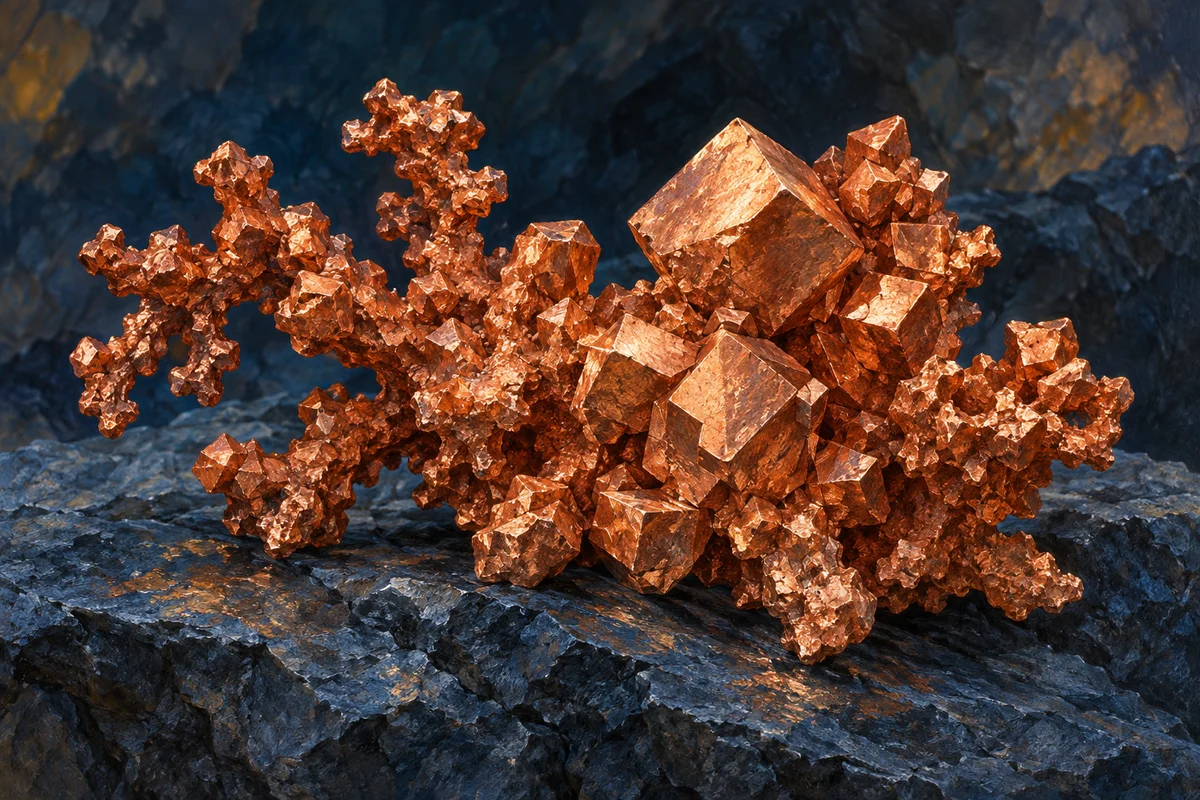
Copper. Copper’s symbol comes from cuprum.
Sources for this answer
13 / 50Which element has the symbol Pb?Reveal answerHide answer
Answer
Lead. Pb comes from plumbum, the Latin name for lead.
Sources for this answer
14 / 50Which element has the symbol Sn?Reveal answerHide answer
Answer
Tin. Sn comes from stannum, the Latin name for tin.
Sources for this answer
15 / 50Which element has the symbol W?Reveal answerHide answer
Answer
Tungsten. The symbol W reflects the alternative name wolfram.
Sources for this answer
16 / 50What is the chemical symbol for calcium?Reveal answerHide answer
Answer
Ca. Calcium uses Ca. In a two-letter element symbol the first letter is capitalized and the second is lowercase; C alone is carbon.
Sources for this answer
17 / 50Which element has the symbol Mg?Reveal answerHide answer
Answer
Magnesium. Mg is magnesium; manganese uses Mn.
Sources for this answer
18 / 50Which element has the symbol Al?Reveal answerHide answer
Answer
Aluminum. Aluminum, also spelled aluminium, has atomic number 13.
Sources for this answer
19 / 50Which element has the symbol Si?Reveal answerHide answer
Answer
Silicon. Si is silicon; S is sulfur and Ag is silver. Silicon’s semiconducting properties make it useful in electronic devices.
Sources for this answer
20 / 50Which element has the symbol P?Reveal answerHide answer
Answer
Phosphorus. Phosphorus uses P, while potassium uses K.
Sources for this answer
21 / 50Which element has the symbol S?Reveal answerHide answer
Answer
Sulfur. Sulfur is a nonmetal with atomic number 16.
Sources for this answer
22 / 50Which element has the symbol Cl?Reveal answerHide answer
Answer
Chlorine. Chlorine is a halogen in group 17.
Sources for this answer
23 / 50Which element has the symbol N?Reveal answerHide answer
Answer
Nitrogen. N is nitrogen. Nitrogen gas makes up about 78% of dry air, so it is more abundant in the atmosphere than oxygen.
Sources for this answer
24 / 50Which element has the symbol Ne?Reveal answerHide answer
Answer
Neon. Neon is a group 18 noble gas. An electrical discharge through neon produces the reddish-orange glow of a true neon sign.
Sources for this answer
25 / 50Which element has the symbol Ar?Reveal answerHide answer
Answer
Argon. Ar is argon, a noble gas. Its low reactivity makes it useful as a protective atmosphere where other substances must not react with air.
Sources for this answer
26 / 50Which element has the symbol Zn?Reveal answerHide answer
Answer
Zinc. Zinc coatings help protect steel from corrosion.
Sources for this answer
27 / 50Which element has the symbol Ni?Reveal answerHide answer
Answer
Nickel. Nickel uses Ni, whereas nitrogen uses N and neon uses Ne. These similar symbols represent different elements.
Sources for this answer
28 / 50Which element has the symbol I?Reveal answerHide answer
Answer
Iodine. Iodine is a halogen; iron uses Fe.
Sources for this answer
29 / 50Which element has the symbol U?Reveal answerHide answer
Answer
Uranium. Uranium is an actinide with atomic number 92.
Sources for this answer
30 / 50Which element has the symbol Pt?Reveal answerHide answer
Answer
Platinum. Platinum is a metal used in catalysts and jewelry.
Sources for this answer
Atoms and their numbers
02 / 50Which element has atomic number 1?Reveal answerHide answer
Answer
Hydrogen. Atomic number counts protons. Hydrogen has one proton, so every hydrogen atom has atomic number 1, whatever its isotope or charge.
Sources for this answer
03 / 50What does an element’s atomic number count?Reveal answerHide answer
Answer
Protons. An element is defined by its proton count. Changing neutrons produces an isotope; changing electrons produces an ion.
Sources for this answer
08 / 50Which element has atomic number 6?Reveal answerHide answer
Answer
Carbon. Carbon has six protons. Its isotopes, including carbon-12 and carbon-14, keep those six protons but differ in neutron count.
Sources for this answer
31 / 50Which element has atomic number 2?Reveal answerHide answer
Answer
Helium. Helium has two protons. Its atomic number remains 2 whether the atom is neutral, ionized, or a different isotope.
Sources for this answer
32 / 50Which element has atomic number 3?Reveal answerHide answer
Answer
Lithium. Lithium has three protons and is the first metal in group 1. Hydrogen comes above it in the table but is a nonmetal.
Sources for this answer
33 / 50Which element has atomic number 8?Reveal answerHide answer
Answer
Oxygen. An oxygen atom has eight protons in its nucleus.
Sources for this answer
34 / 50Which element has atomic number 10?Reveal answerHide answer
Answer
Neon. Neon has ten protons and occupies the end of period 2. Its position in group 18 places it among the noble gases.
Sources for this answer
35 / 50Which element has atomic number 20?Reveal answerHide answer
Answer
Calcium. Calcium has twenty protons and belongs to group 2. Atomic number is a proton count, not the atom’s total mass.
Sources for this answer
44 / 50What is an atom that has gained or lost electrons called?Reveal answerHide answer
Answer
An ion. Losing electrons makes a positive ion; gaining them makes a negative ion. The proton count, and therefore the element’s identity, stays the same.
Sources for this answer
45 / 50Isotopes of one element differ in their number of what?Reveal answerHide answer
Answer
Neutrons. Isotopes have the same number of protons but different numbers of neutrons. Carbon-12 and carbon-14 are therefore both carbon.
Sources for this answer
46 / 50Which two particles are added to find an atom’s mass number?Reveal answerHide answer
Answer
Protons and neutrons. Mass number is the integer total of protons and neutrons in one nucleus. It differs from the abundance-weighted atomic mass shown on many tables.
Sources for this answer
Groups, periods, and properties
05 / 50Which noble gas has the chemical symbol He?Reveal answerHide answer
Answer
Helium. Helium is in group 18. Its filled first electron shell makes it very unreactive, which is characteristic of the noble gases.
Sources for this answer
09 / 50Which metal is liquid at about 20°C?Reveal answerHide answer
Answer
Mercury. Mercury melts at about −39°C, so it is liquid at ordinary room temperature.
Sources for this answer
36 / 50What are the vertical columns of the periodic table called?Reveal answerHide answer
Answer
Groups. Groups are the vertical columns. Elements in a group often behave similarly because their outer electrons have related arrangements.
Sources for this answer
37 / 50What are the horizontal rows of the periodic table called?Reveal answerHide answer
Answer
Periods. Periods run horizontally. Atomic number increases from left to right across each row of the modern periodic table.
Sources for this answer
38 / 50What is the usual name for group 17 elements?Reveal answerHide answer
Answer
Halogens. Fluorine, chlorine, bromine, and iodine belong to the halogens.
Sources for this answer
39 / 50What is the usual name for group 18 elements?Reveal answerHide answer
Answer
Noble gases. Group 18 contains helium, neon, argon, and the other noble gases. Their filled outer electron shells help explain their generally low reactivity.
Sources for this answer
40 / 50What is the name for group 2 metals?Reveal answerHide answer
Answer
Alkaline earth metals. Magnesium and calcium are alkaline earth metals.
Sources for this answer
41 / 50Which family includes lithium, sodium, and potassium?Reveal answerHide answer
Answer
Alkali metals. Lithium, sodium, and potassium are group 1 alkali metals. Hydrogen sits above them in the table but is not an alkali metal.
Sources for this answer
42 / 50Which part of an atom carries a negative electric charge?Reveal answerHide answer
Answer
An electron. Electrons are negatively charged; protons are positively charged.
Sources for this answer
43 / 50Which particle in an atomic nucleus has no electric charge?Reveal answerHide answer
Answer
A neutron. A neutron has no net electric charge. Together with positively charged protons, neutrons make up atomic nuclei other than ordinary hydrogen’s.
Sources for this answer
47 / 50Diamond and graphite are forms of which element?Reveal answerHide answer
Answer
Carbon. Diamond and graphite are carbon allotropes: the same element with different atomic structures. Those structures give them very different properties.
Sources for this answer
48 / 50Which element is the main component of pencil “lead”?Reveal answerHide answer
Answer
Carbon. Pencil cores use graphite, a form of carbon, mixed with clay.
Sources for this answer
49 / 50Which nonmetal is liquid at about 20°C?Reveal answerHide answer
Answer
Bromine. Bromine is liquid at 20°C because this temperature is above its melting point and below its boiling point. Mercury is liquid too, but is a metal.
Sources for this answer
50 / 50Which scientist is especially associated with the 1869 periodic table?Reveal answerHide answer
Answer
Dmitri Mendeleev. Mendeleev published his table in 1869, leaving gaps and predicting properties of missing elements. The modern table is ordered by atomic number.